Getting Hard
I’ve done most of my work behind a computer. Turns out you can do a lot there! I think the reason behind this for me is accessibility. To a reasonable extent, software is a level playing field - a modern laptop is all you need, .
The only thing between you and real impact is clever insight and good implementation. For me, this was in astronomy— an intrinsically hands-off field.
Software is fun. But I wouldn’t say it’s what I’m made for. Really, I just want to make cool, real things. So when I got the call from Optica to work for the summer, I took the chance to switch things up.
This blogpost is a mini proof-of-life for my work over this last summer, and a cursory accounting of what to expect when getting into hardware from the softwareman’s perspective.
The engineering problem
Optica is a metals recycling company. I won’t go into details on tech or strategy here for obvious reasons, but the core engineering task is to take pieces of shredded scrap aluminum, use LIBS to ascertain their composition, and subsequently separate material into buckets.
This involves a physical system to feed the pieces in a regular fashion onto a conveyor belt, perception to detect and reason about piece geometry, high-speed control to target and strike the moving piece with a high-powered pulsed laser, and a mechanical sortation system.
Lessons from Going (from) Soft(ware) to Hard(ware)
Physical engineering has a very different flavor. One of my goals this summer was to get clarity on this, and so I’ve put together this brief collection of the big points.
Stupid Things Pile Up
Let’s say your program has some sort of bug or issue. The path to a fix is essentially always:

Software is convenient by design; your results are perfectly determined by your code; code is perfectly accessible and editable. It’s a rather clean process - changing a textfile is free.
In hardware, this is not the case. You’re very much liable to stupid blockers; things like stripping a screw, not having the right tool, manufacturer sending the wrong item, etc. The process has no guarantee of simplicity or convenience. Murphy’s law guarantees the opposite.
Take the pneumatics system for example; the airtank would need to be upgraded to feed our new sorter— in principle a very simple thing! Just a tank that stores pressurized air — I was able to get one off McMaster for next-day delivery in under 10 minutes. The next morning, the 8 foot tall, 700lb beast comes off the truck. Problem— the trucker’s pallet jack can’t raise it high enough onto our factory floor from the street. Trucker leaves, and I’m left with an expensive, immovable piece of metal on the sidewalk in front of our building.
The path to the solution then looks something more like this:

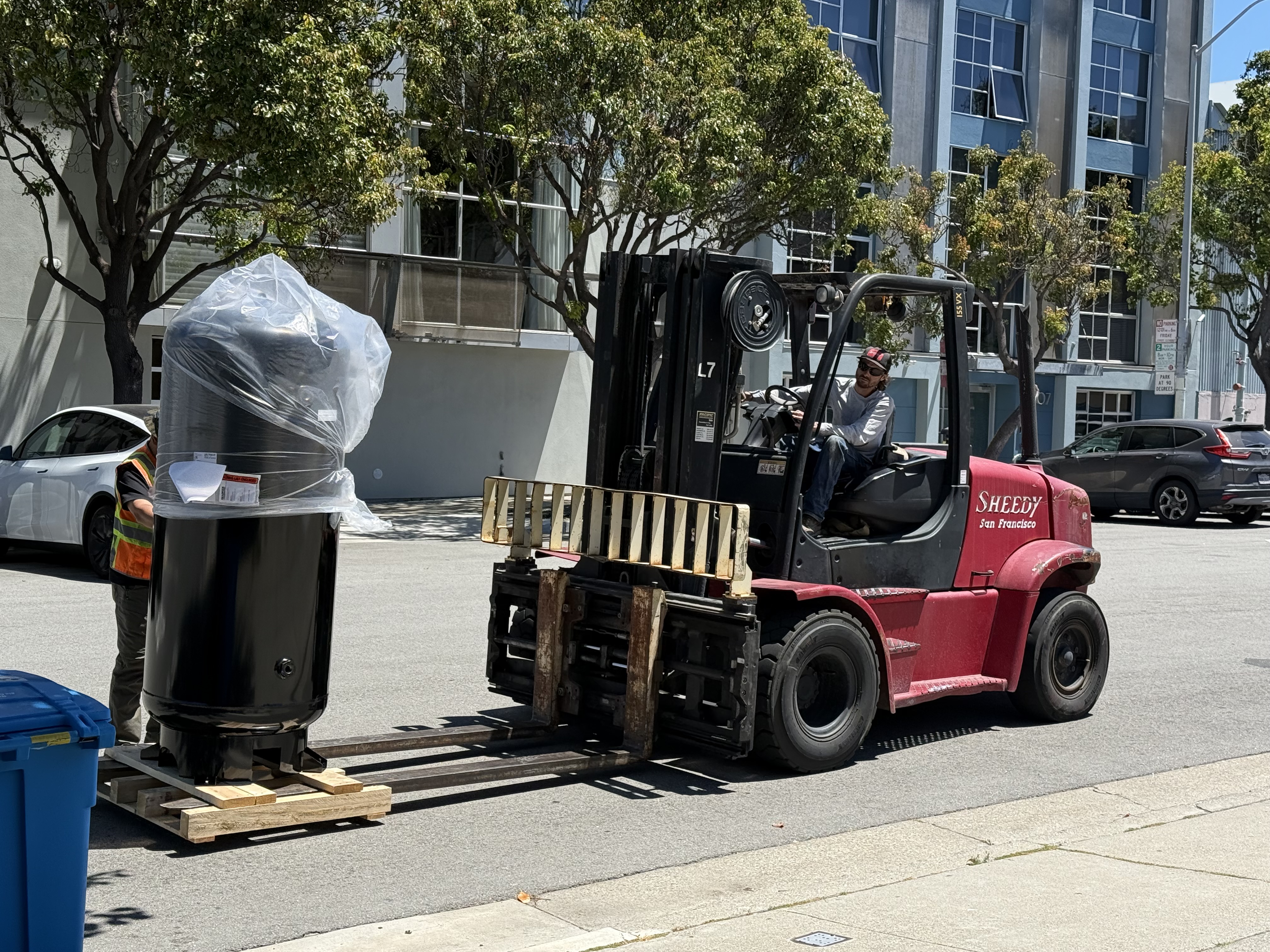
To put it simply, stupid things always come up, and they often turn out to be the hard part.
Design Inertia
Working in hard tech, there’s an effect that I’d like to call design inertia: the tendency to stick to one design longer than it merits.
Going from zero-to-one in a physical system is hugely committal.
- Parts cost money. Sometimes lots of money.
- Parts take time to arrive, sometimes weeks, sometimes even months.
- Fabrication and assembly takes TONS of full-effort man-hours.
So when it doesn’t work, the first instinct is to make a modification. Then another, and another, each iteration not quite working but suggesting a patch for the next. You end up stuck in a local descent. Often, the actual solution is on an entirely different design branch. It’s both literally and emotionally difficult to make that leap.
Not only this, but in fast-moving settings like a startup, you’ll often have already built on top of that design. Any change at a lower level cascades into exponentially more work downstream. The marginal cost of design change is enormous, so it takes a great force to drive one.
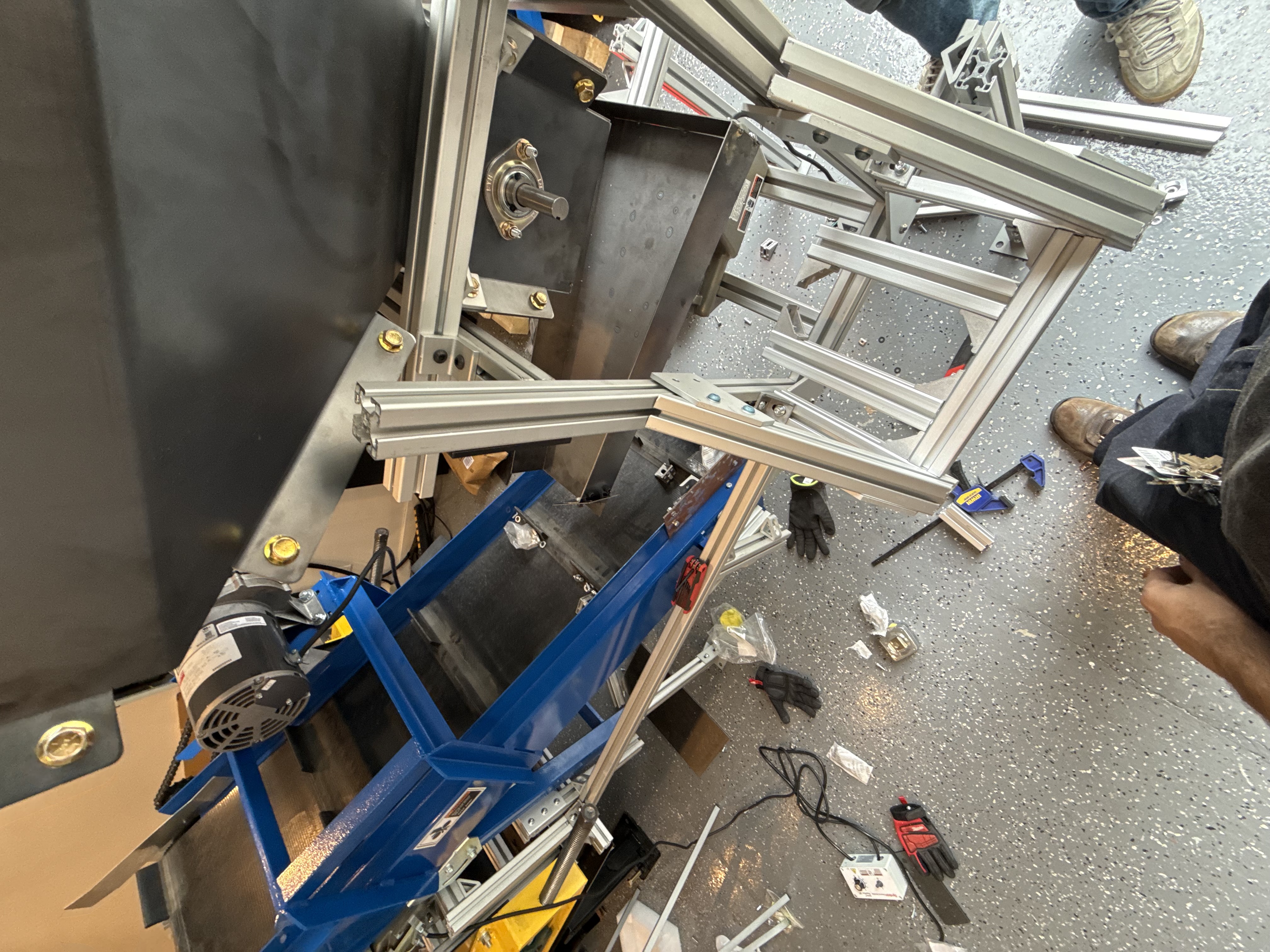
But sometimes there’s a demo tomorrow, and the feeding system is just not working as well as it needs to.
Things can just Not Work
The blessing of software is in the infallibility of computers. You— through your code— are in full control of the result, which narrows your scope of responsibility down to just your own logic. If you’re right, it will Just Work™.
When engineering in the real world, you’re susceptible to hilarious, niche faults throughout the entire hierarchy of your system. You can do everything right, and something obscure will find a way to break it all. Good luck finding it…
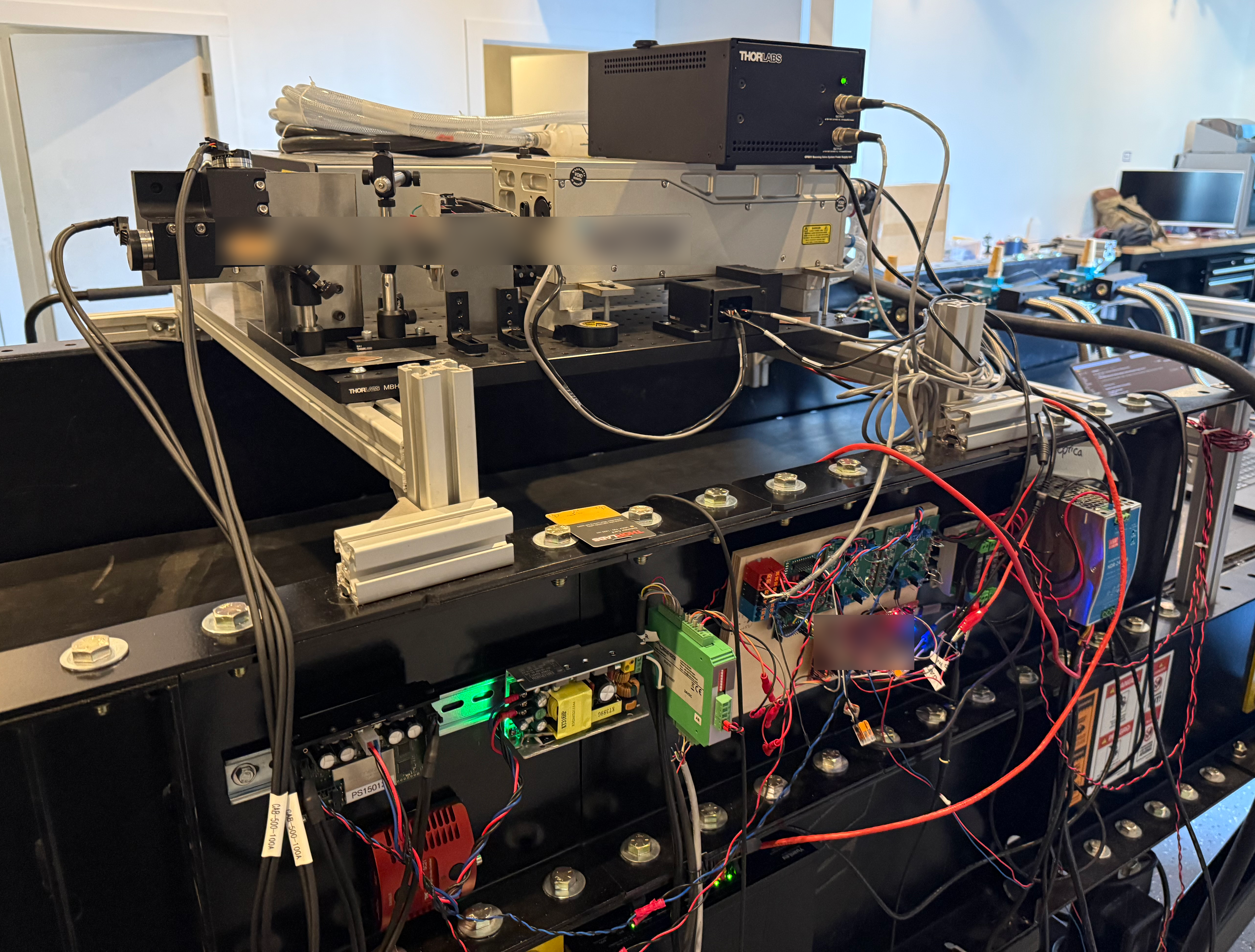
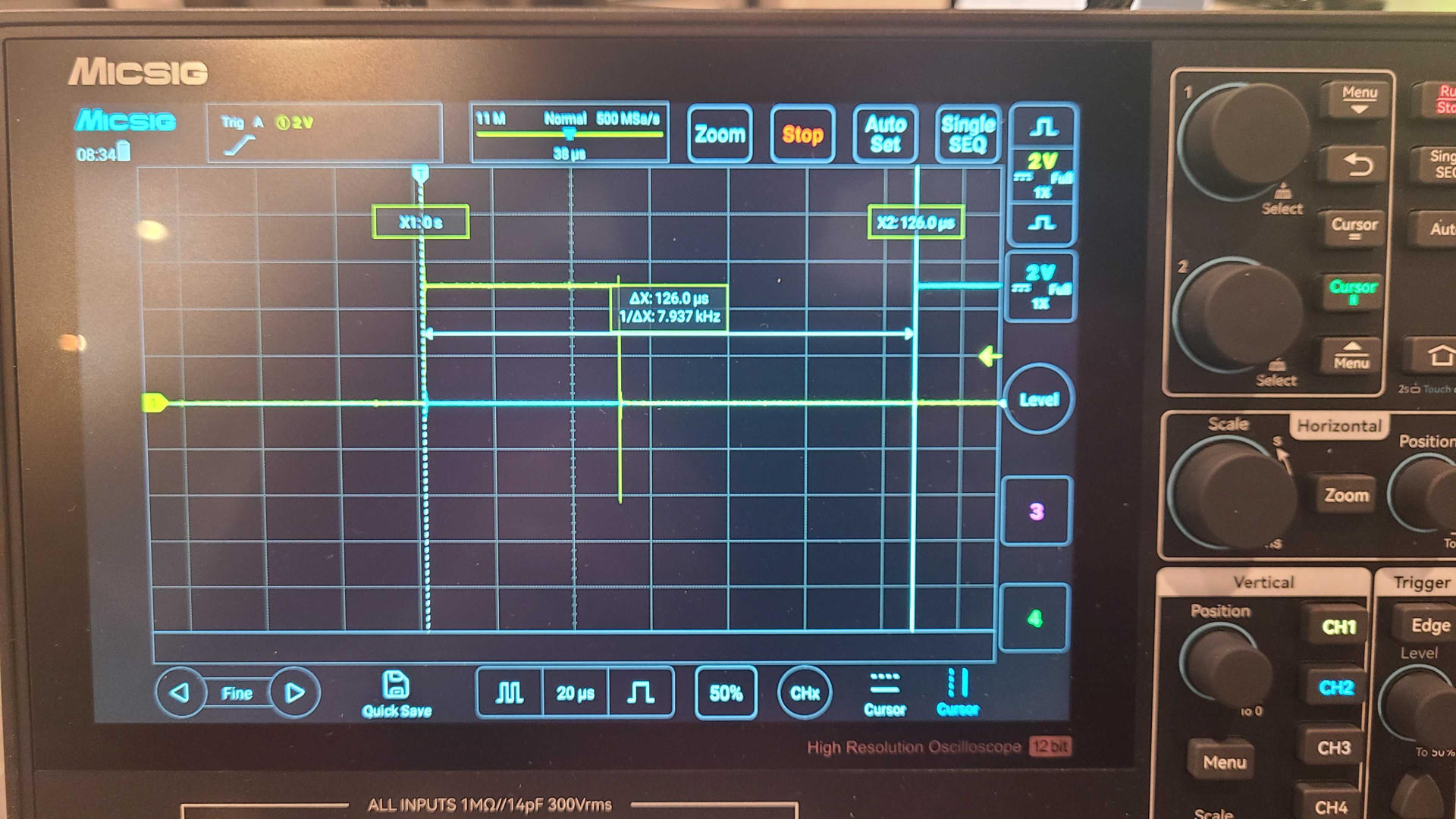
There was a distinct roadblock within our controls system— not a vastly complex system, but one that we had checked over and over again. All was OK, but the laser was not firing. It got to the point where we spent over a thousand dollars just to ship the laser back to the manufacturer and see if it was their issue.
The culprit? One firmware-level value for the laser’s internal Q-switch timing FPGA was misconfigured by a few microseconds…
The real-to-code bridge
Software and hardware development obviously cannot exist independently of one another. But the methodological bridge between them is often overlooked, and can turn out to be very difficult. In robotics for example, one of the hardest parts of robot design is making the URDF file, essentially a perfect descriptor of your robot: coordinate conventions, its joints and linkages, and physical properties such as centers of mass, limits, and so on. Even small inaccuracies in a sufficiently complex robot will wreck control and result in poor sim to real.
In our case at Optica, we’d have to figure out how to precisely measure our entire physical setup, and how to naturally describe it in software: where its sensors are, where the laser is, how to control the laser, how the laser focusing responds to control voltages, etc. We would need precise values for good performance, on the order of micrometers and microseconds, so the whole calibration process had to avoid manual measurement entirely. This turned out to be a fun challenge, but much more work than was initially anticipated.
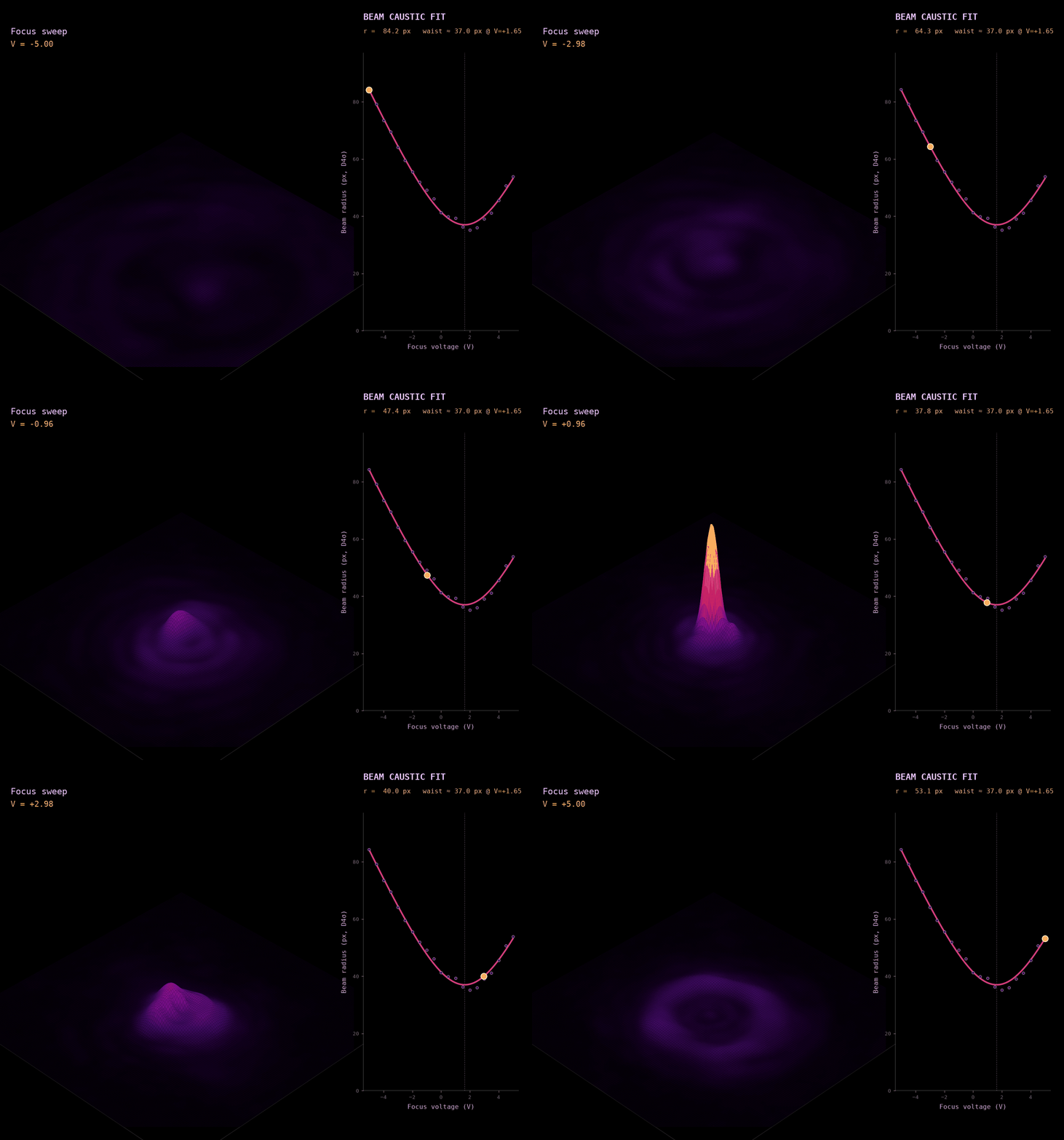
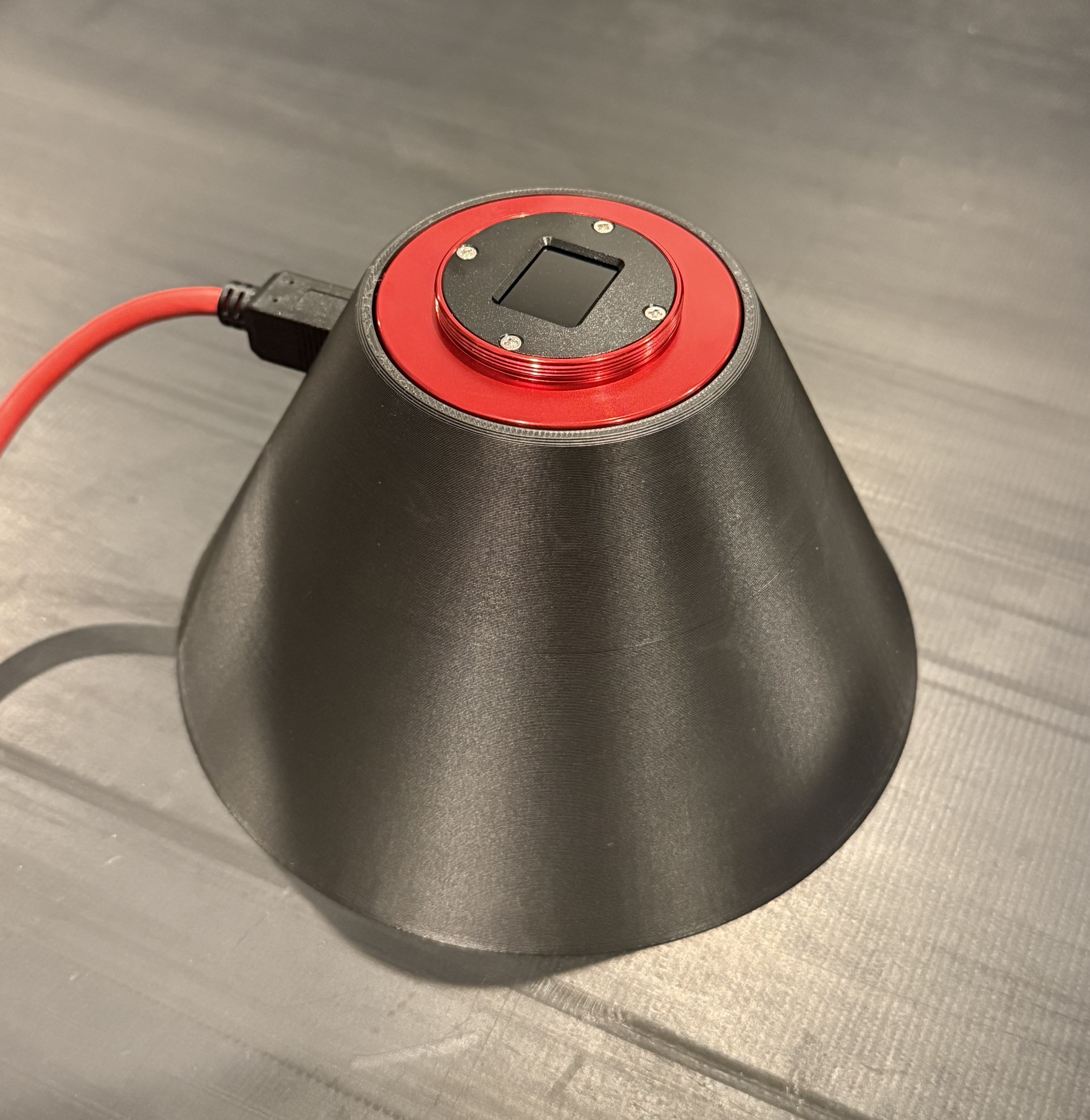
A side remark: hardware makes you scrappy. You don’t always have what you need on hand (or you accidentally break a several thousand dollar instrument by blasting it with the laser), so you get to adapt! Instead of buying (another) specialized laser beam profiler, I figured out that I could instead repurpose the CMOS sensor on this astronomy cam, put some optics on it, and mount it on my calibration assembly.
The Cool Factor
Of course, the most important part.
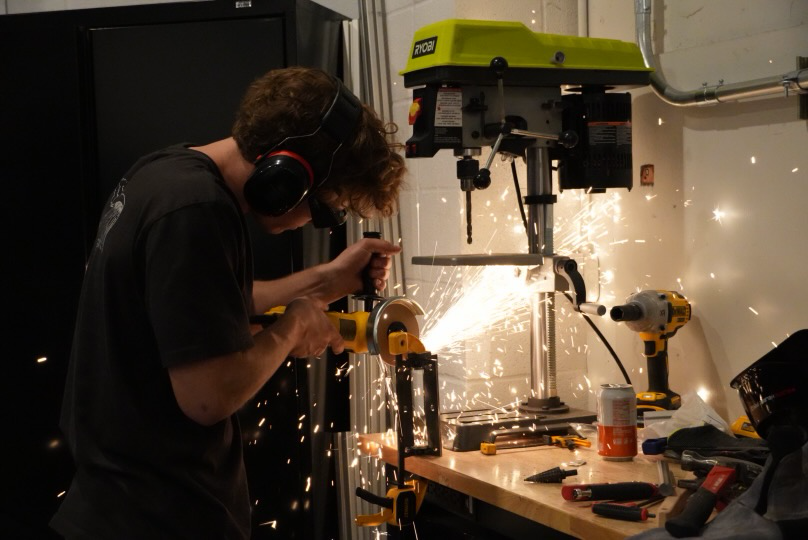
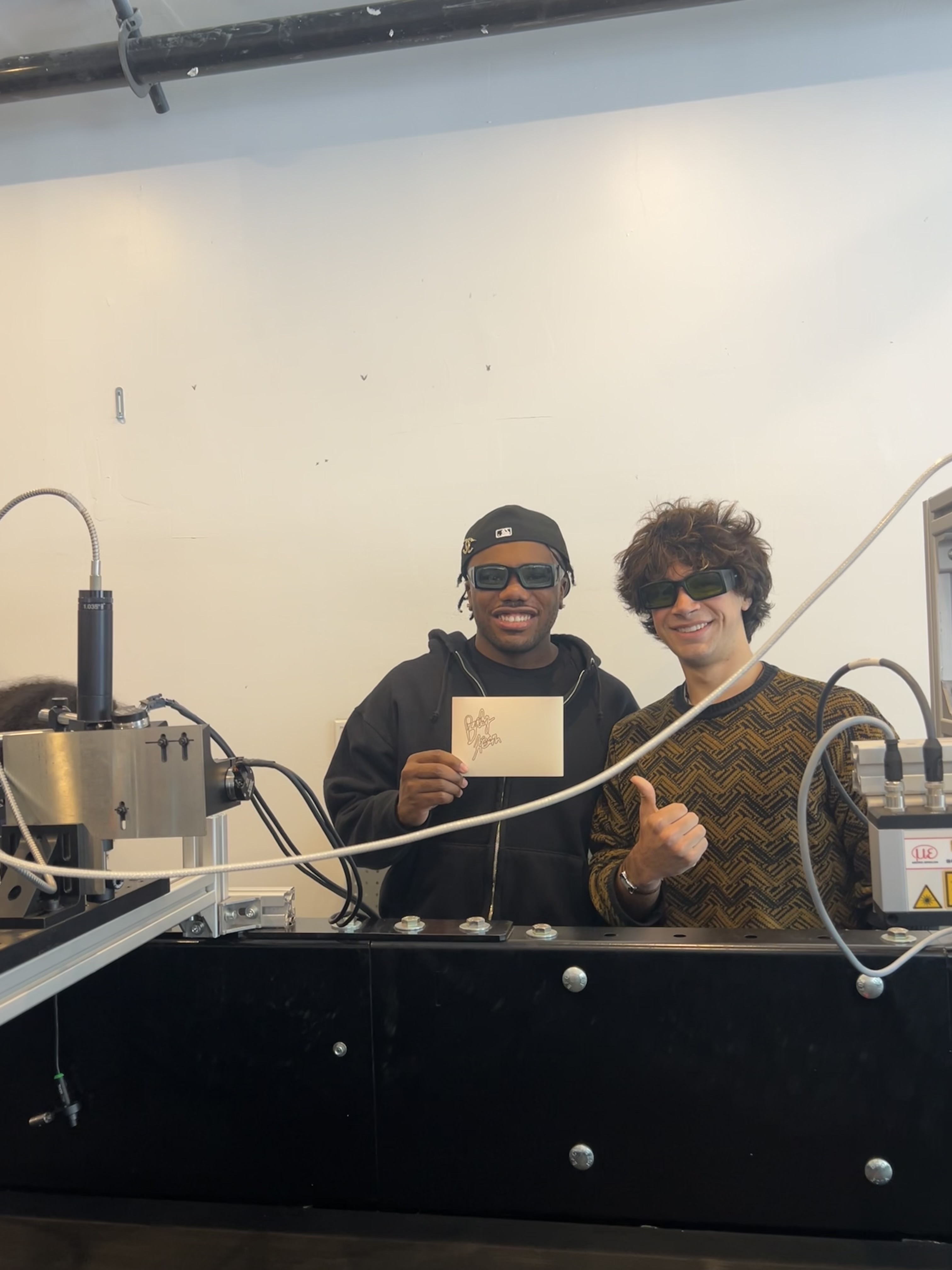
In my humble opinion, making crazy stuff happen right in front of you will always be more rewarding than any result on a computer screen. I value things you can really experience.
On (The & My) Future
It goes without saying that software is becoming far less of a human task. Within four years, models have gone from useless to essentially superhuman at software development, and it’s unlikely that SWE will be something that people even do in the future. Indeed, coding is the perfect task; it is verifiable, fully digital, extremely fast to rollout, and strongly transferable. It makes sense that this occurred at the base of the exponential.
Hardware is at a different point. It is less verifiable, not digital, slow to rollout, and difficult to transfer across subdomains. While models have incredible knowledge of specifics across many fields, they can’t do anything with it. Generative CAD is not yet terribly useful, and it obviously can’t mount an extrusion for me.
However, the day that we have useful artificial physical engineers will be the day the world really starts to look different. It’s clear to me that the bottleneck for that is physical embodiment, and I’m thrilled to work on fixing that.